
The marine tropics: an important evolutionary engine

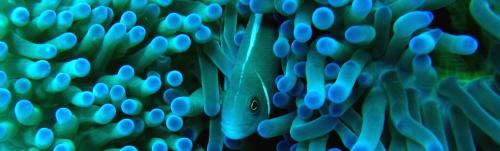
Tropical fish. Photo: Peter Cowman
September 7, 2016

A new Global Ecology and Biogeography paper co-authored by former YIBS Donnelley Fellow Dr. Peter Cowman explores the role of tropical coral reefs in the evolutionary speed of reef fish. Through the use of evolutionary trees calibrated with genetic fossil data, Dr. Cowman and his team found the four studied reef fish families presented a faster formation of new and diverse species, lower extinction rates, and higher geographic dispersal. This research advances the theory that most extratropical reef fish lineages have originated from tropical areas.


This research was supported by the Donnelley Postdoctoral Environmental Fellowships.


News & Updates

An artist’s depiction of Likweli, a new Colobus monkey species that inhabits forest canopies in the Democratic Republic of Congo and is difficult to photograph.  Illustration by Kimio Honda

Meet ‘Likweli’: A new monkey species discovered in the Congo Basin

July 15, 2026
An international team of scientists, including Yale researchers, has described a new Colobus monkey species inhabiting high forest canopies in the Democratic Republic of...
Distinctive spiral striations on the teeth of extant species of Cyclothone — the world’s most numerically abundant fish genus — match striated patterns on fossilized teeth dated to more than 55 million years ago.  Photo by Karinne Tennenbaum

Tiny teeth fossils reveal ancient origins of ocean’s most abundant deep-sea fish

July 2, 2026
The deep sea, which is typically defined as depths of at least 200 feet, is home to 90% of marine fish life, but the fishes that inhabit it are poorly represented in the...
Southern Appalachian salamander at Grandfather Mountain State Park, North Carolina.

The secret lives of salamanders

June 22, 2026
For her doctoral dissertation, Yale’s Nathalie Alomar decided to study a small amphibian that appeared to have eluded the forces of evolution.  She found that there is more...