
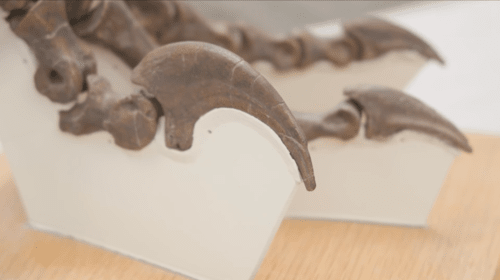
A new Yale-led study combines 3D images and computer animation to visualize the movements of a long-extinct dinosaur.
Researchers have developed a new way to visualize how ancient animals moved as they roamed the Earth starting with a Yale-discovered dinosaur's sickle-clawed foot.
The new approach, which uses computer animation software to combine 3D models of fossil bones with information gleaned from X-ray videos of the moving joints of modern animal species, could change our understanding of how prehistoric creatures chased prey, swam coastal waterways, soared across the sky, climbed over difficult terrain, and ate breakfast.
A study describing the new methodology appears in the journal Nature Communications.
"This is a new way to extract data that have long been locked away in the fossil record. In a sense, we're re-animating the bones from a museum's drawer," said Armita Manafzadeh, lead author of the study. She is a Yale postdoctoral researcher affiliated with the Yale Institute for Biospheric Studies, the Department of Earth & Planetary Sciences, and the Yale Peabody Museum.
For more information, click here for an article published by Yale News.


